


Abstract
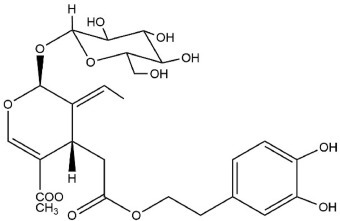
Oleuropein, a major bioactive phenolic compound from olive leaves, has attracted considerable interest for its health benefits. Targeted fractionation of oleuropein from crude extracts is hampered by the co-existence of numerous structurally similar metabolites, making conventional chromatographic separation inefficient. Here we describe, for the first time, a compact predictive framework that combines high-speed countercurrent chromatography (HSCCC), discrete Tchebichef moment (TM) feature extraction, and stepwise regression (SR) modelling to quantify oleuropein. Olive leaves were extracted with 80 % ethanol, and the crude extract was subjected to continuous-injection HSCCC in reverse-phase mode using an ethyl acetate-petroleum ether-water (6:0.06:7) solvent system. HPLC analysed the resulting fractions and reference standards. Chromatograms were converted into two-dimensional matrices from which TMs up to the 20th order were computed. Forward stepwise regression identified a small set of TM coefficients that correlated strongly with oleuropein concentration and yielded a linear predictive model with high accuracy (R-2 > 0.99). In comparison to the MCR-ALS, the TM-based model achieved superior predictive performance using fewer parameters. The integrated HSCCC-TM-SR approach provides a rapid and scalable method for quantifying oleuropein and may be extended to other complex natural products.
Keywords Plus: QUANTITATIVE-ANALYSIS,CHROMATOGRAPHY,SEPARATION
Published in JOURNAL OF CHROMATOGRAPHY A,Volume1763;10.1016/j.chroma.2025.466445,NOV 22 2025