


Abstract
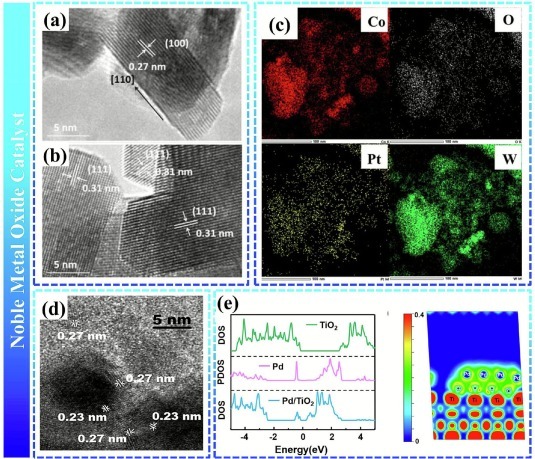
The utilisation of CO2 is a global challenge. The CO2-oxidative dehydrogenation (CO2-ODH) of alkanes is an effective solution, enabling both CO2 utilization and conversion into high-value products. However, CO2-ODH is constrained by the challenges like CO2 activation and undesirable side reactions such as dry reforming. The quantitative relationship between the catalyst active sites and reaction activity, as well as the reaction mechanism, remains insufficiently summarized and elucidated. Thus, the rational design of catalysts to improve CO2 and alkane conversion while maintaining high alkene selectivity is crucial for CO2-ODH applications. This review summarizes the construction and performance of different active sites, including noble metal oxide, transition metal oxide, alloy, and single-atom catalysts (SACs). It also compares thermal, photothermal and microwave catalysis applications. The Pt-metal oxide interface formed by PtSn3-SnOx and Pt-Co-In/CeO2 demonstrates high reactivity and thermal stability, creating dispersed Pt active sites and high d-band center crystal planes through promoters. Alloy-oxide interfaces or high-index facet alloy crystal planes may serve as an effective strategy to enhance CO2-ODH dehydrogenation catalysts.
Keywords Plus: PROPANE OXIDATIVE DEHYDROGENATION,IRON-BASED CATALYST,N-BUTANE,ETHANE DEHYDROGENATION,EFFICIENT CATALYST,OXYGEN MOBILITY,LIGHT ALKANES,CO2 REDUCTION,SOFT OXIDANT,DIOXIDE
Published in FUEL,Volume411;10.1016/j.fuel.2025.138114,MAY 1 2026