


Abstract
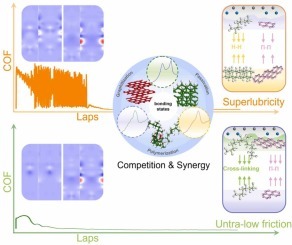
The formation and structure of tribo-films critically influence the engineering performance of diamond-like carbon (DLC) film. Currently, DLC film is considered promising candidates for protecting moving components in methane environments. Based on this, this study investigated the structural evolution of sliding interfaces between hydrogen-free/hydrogenated DLC and WC in self-mated/non-self-mated tribopairs under methane exposure to elucidate the role of tribofilms in DLC tribological behavior. It revealed the correlations between intrinsic film properties (sp2 carbon ordering, hybridization, and polymerization) and tribo-induced transformations, clarifying their mechanistic contributions. The results demonstrated that hydrogen-free and low-hydrogen DLC films exhibited stronger adhesion to counterpart balls, causing severe material transfer in non-self-mated pairs and significant spalling in self-mated pairs. High-hydrogen DLC films displayed reduced interfacial friction but induced low-density, high-friction polymer-like carbon (PLC) formation via material transfer. Consequently, the friction coefficient initially decreases and then increases with rising hydrogen content in the films. This study provides design guidelines for protective coatings of moving components serving in methane environments.
Keywords Plus: FRICTION,LUBRICATION,MOLECULES,MECHANISMS,FILMS,WEAR
Published in TRIBOLOGY INTERNATIONAL,Volume219;10.1016/j.triboint.2026.111874,JUL 2026