


Abstract
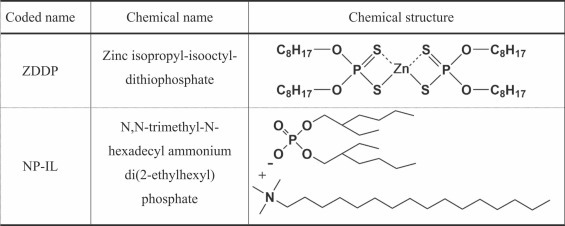
In electrified vehicle transmissions, high speeds, variable loads, and stray currents collectively induce intense fretting wear, while electrification (Joule heating)-driven electroplasticity accelerates tribosystem degradation, severely compromising component durability. This work aims to unravel the fretting wear mechanism of AISI 52100 bearing steel interfaces lubricated with ZDDP (zinc isopropyl-isooctyl-dithiophosphate) and NP-IL (N,Ntrimethyl-N-hexadecyl ammonium di(2-ethylhexyl) phosphate) additives under electrified conditions. Fretting tests were conducted on an SRV-V tribometer (ball-on-disc configuration) with a 100 mu m displacement amplitude, 300 N load, 30 Hz frequency, 120 degrees C temperature, and DC current levels of 0, 4, and 8 A. Compared to PAO8 base oil, the additives reduced the friction coefficient by 11-15% and the tribopair wear volume by 30-36% under electrification; however, they failed to mitigate morphological and microstructural damages (e.g., severe adhesive wear, scuffing, delamination, and fatigue cracking). These damages are attributed to electroplasticity-induced material softening under the synergistic effect of mechanical, electrical, and thermal stresses. Notably, fretting scars lacked oxidation products but contained soot-like amorphous carbon derived from lubricant decomposition, forming a conductive carbon-rich third body that facilitates electrical transfer. These findings highlight the critical need for developing electroplasticity-resistant materials to extend the service life of electrified vehicle tribosystems.
Keywords Plus: BEHAVIOR,PERFORMANCE,FILMS,DLC
Published in TRIBOLOGY INTERNATIONAL,Volume221;10.1016/j.triboint.2026.112042,SEP 2026